
The Future of Waterproofing Technology
The future of waterproofing is transforming the construction industry through seamless protection systems, advanced materials, and longer-lasting building performance.
The construction industry is evolving rapidly. Builders are expected to deliver stronger, smarter, and more sustainable structures. They must also meet tight project deadlines and reduce long-term maintenance costs.
As buildings become more complex and performance-driven, waterproofing has become a critical factor in ensuring structural durability and maximizing lifecycle value.
Waterproofing is no longer considered a secondary construction activity. It now plays a central role in protecting assets, reducing maintenance expenses, and preserving structural integrity. This applies to residential, commercial, industrial, and infrastructure projects.
Modern construction demands waterproofing solutions that provide reliability, speed, and long-term performance.
Modern waterproofing systems are becoming increasingly popular. They offer superior durability and flexibility. They also provide long-term protection against environmental damage.
Why Traditional Waterproofing Is Struggling in Modern Projects
Construction timelines today are significantly more aggressive than they were a decade ago. Commercial buildings, retail developments, hospitals, industrial facilities, hotels, and premium residential projects all operate under strict schedules where delays can directly affect revenue and operational efficiency.
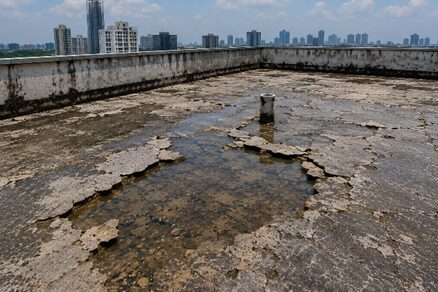
Traditional waterproofing systems often struggle to meet these demands because they typically require multiple layers, overlapping joints, lengthy curing periods, and regular maintenance. These limitations can increase labour costs and create vulnerabilities over time.
Even minor waterproofing failures can lead to water seepage, concrete deterioration, corrosion of reinforcement steel, mould growth, damage to finishes, and costly repair cycles. Consequently, project stakeholders are increasingly evaluating waterproofing systems based on lifecycle performance rather than initial installation costs.
The Rise of Seamless Waterproofing Systems
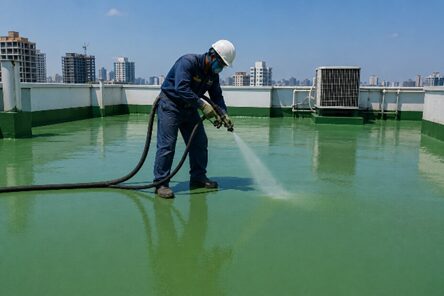
One of the most significant advancements in the waterproofing industry is the emergence of seamless waterproofing technology. Unlike traditional systems that rely on joints, overlaps, and seams, seamless membranes create a continuous protective barrier that minimizes potential points of failure.By eliminating seams, these systems reduce the risk of leakage around pipe penetrations, drainage outlets, corners, irregular surfaces, and expansion joints.
Seamless waterproofing solutions also provide greater design flexibility, allowing architects and engineers to confidently waterproof complex roof structures, curved surfaces, podium decks, exposed terraces, industrial facilities, and other challenging applications.
As construction technologies continue to evolve of future waterproofing, seamless systems such as Polyurea-based waterproofing are gaining widespread acceptance across residential, commercial, industrial, and infrastructure projects.
Why Speed Has Become a Major Factor in Waterproofing
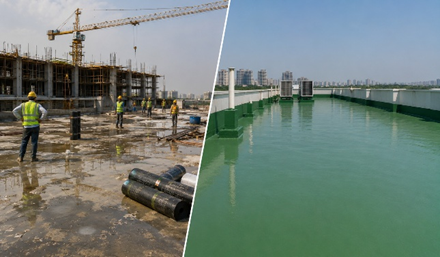
In modern construction, time directly impacts project cost. Waterproofing activities frequently influence construction schedules because subsequent trades often depend on the successful completion of waterproofing work.Delays in waterproofing can postpone flooring installation, interior finishing, equipment installation,
Modern waterproofing technologies significantly reduce installation times while maintaining superior performance standards. Faster execution enables contractors to accelerate construction schedules, minimize downtime, and reduce disruption in occupied buildings.
This advantage is particularly valuable for commercial buildings, hospitals, hotels, industrial facilities, parking structures, and large infrastructure developments where operational continuity is essential.
Waterproofing Is No Longer Just About Leakage
Modern project teams expect waterproofing systems to deliver far more than water resistance. Today’s high-performance solutions must also provide flexibility, UV resistance, abrasion resistance, chemical resistance, and long-term durability.Buildings are subjected to constant movement, environmental exposure, and operational demands. Traditional systems often require frequent maintenance due to vibration, thermal movement, standing water, sunlight exposure, and heavy traffic
This advantage is particularly valuable for commercial buildings, hospitals, hotels, industrial facilities, parking structures, and large infrastructure developments where operational continuity is essential.
The Hidden Cost of Waterproofing Failure
The true cost of waterproofing failure often extends far beyond visible water damage. Persistent moisture intrusion can affect interior finishes, paint systems, false ceilings, electrical systems, reinforcement steel, and the structural integrity of a building.
For commercial properties, waterproofing failures can also result in operational downtime, increased facility management costs, tenant dissatisfaction, and damage.
In many cases, repeated repair cycles ultimately cost significantly more than investing in a high-quality waterproofing solution during the initial construction phase. This realization has encouraged developers and consultants to focus on long-term durability rather than short-term savings.
The Future of Waterproofing Is Performance-Based
The future of waterproofing is being shaped by performance, efficiency, and durability. Industry trends indicate growing demand for faster installation methods, seamless protection systems, reduced maintenance requirements, advanced coating technologies, and improved lifecycle performance.
As construction standards continue to evolve, modern waterproofing systems will play an increasingly important role in protecting buildings, industrial assets, and critical infrastructure from environmental exposure.
Innovative solutions such as Polyurea waterproofing represent the next generation of protection systems, delivering exceptional durability, rapid application, and long-term reliability. As demand for low-maintenance construction solutions continues to grow, seamless waterproofing is rapidly becoming the benchmark for future-ready construction projects.
Conclusion: Building for Long-Term Protection
Waterproofing has evolved from a simple protective measure into a strategic component of modern construction. As buildings become more sophisticated and performance expectations increase, seamless waterproofing systems offer a practical and durable solution that aligns with today’s construction demands.
By combining rapid installation, superior durability, and reduced maintenance requirements, seamless technologies are helping shape the future of construction. For developers, architects, consultants, and building owners, investing in high-performance waterproofing systems is no longer just a recommendation—it is an essential step toward ensuring long-term structural protection and value.